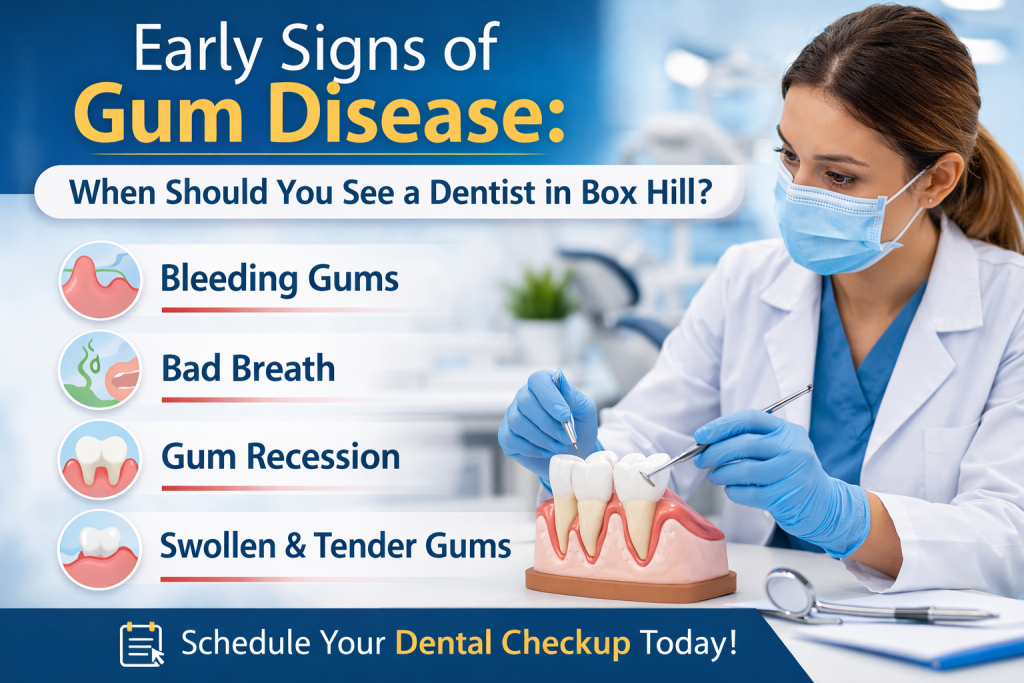
Gum disease is one of the most common oral health problems affecting adults, yet many people don’t realize they have it until it becomes serious. If you’ve ever wondered “how do I know if I have gum disease?”, the answer often lies in subtle symptoms such as bleeding gums, persistent bad breath, or gum sensitivity. Recognizing gum disease symptoms Box Hill residents frequently experience can help you take action early and protect your long-term oral health.
Gum disease begins quietly. In its earliest stage, known as gingivitis, symptoms may appear mild or easy to ignore. However, if left untreated, it can progress into periodontitis, a more severe condition that can damage the gums, bones, and tissues that support your teeth. Early detection and professional dental care are the key to preventing long-term complications.
This guide will help you understand the early warning signs of gum disease, explore the differences between gingivitis vs periodontitis, and explain when it’s time to seek professional gum disease treatment Box Hill residents trust.
Concerned about early gum disease symptoms? Booking a Dental Check Up and Clean can help detect problems early and keep your gums healthy.
What is Gum Disease and Why Does It Happen?
Gum disease, also called periodontal disease, is an infection of the tissues that support your teeth. It is usually caused by plaque, a sticky film of bacteria that constantly forms on teeth. When plaque isn’t removed through regular brushing and flossing, it hardens into tartar and begins irritating the gums.
Over time, this irritation triggers inflammation, which can lead to redness, swelling, and bleeding. If untreated, bacteria can move deeper below the gum line and damage the bone structure that holds teeth in place.
Common Causes of Gum Disease
Several factors contribute to gum disease, including:
- Poor oral hygiene and plaque buildup
- Smoking or tobacco use
- Hormonal changes
- Diabetes and other medical conditions
- Certain medications that reduce saliva
- Genetic predisposition
One of the most frequent bleeding gums causes plaque accumulation along the gumline. As plaque bacteria irritate the gums, they become inflamed and bleed easily during brushing or flossing.
Another warning sign is plaque buildup symptoms, such as rough tooth surfaces, yellow deposits near the gumline, and gum tenderness. Ignoring these early symptoms can allow the condition to worsen.
If you notice these symptoms, it’s important to seek professional care before the infection spreads deeper into your gums.
Wondering if gum disease is one of the common dental problems you might have? Learning the warning signs early can help protect your smile and prevent serious complications.
Early Gum Disease Symptoms You Shouldn’t Ignore
Recognizing early symptoms is crucial for stopping gum disease before it progresses. Many people assume occasional gum bleeding is normal, but it can actually be one of the first signs of gingivitis.
1. Bleeding Gums
Bleeding while brushing or flossing is often the earliest sign of gum inflammation. Healthy gums typically don’t bleed easily, so frequent bleeding may indicate infection or irritation.
2. Persistent Bad Breath
Chronic bad breath, sometimes described as bad breath gum infection, can occur when bacteria accumulate under the gumline. The odor is often caused by toxins released by bacteria.
3. Red or Swollen Gums
Healthy gums should appear firm and pale pink. Redness, swelling, or tenderness can indicate inflammation caused by bacterial infection.
4. Gum Recession
Gum recession signs include teeth appearing longer than usual or increased tooth sensitivity. As gums pull away from teeth, pockets can form where bacteria thrive.
5. Sensitive or Loose Teeth
Advanced gum disease can damage the bone supporting teeth, causing them to shift or feel loose.
6. Pain When Chewing
Pain or discomfort when chewing can signal deeper gum infection or pressure on inflamed tissues.
7. Pus Between Teeth and Gums
This is a clear sign of infection and requires immediate dental attention.
8. Changes in Bite or Tooth Alignment
As gum disease progresses, the supporting bone structure can weaken, causing teeth to shift.
Did you know gum disease can increase the risk of dental cavities? Understanding how oral infections affect your teeth can help you prevent further damage and maintain a healthier smile.
Gingivitis vs Periodontitis: Understanding the Difference
Many patients confuse gingivitis with periodontitis, but they represent different stages of gum disease.
Gingivitis (Early Stage)
Gingivitis is the earliest and most reversible stage of gum disease. Symptoms may include:
- Mild gum bleeding
- Swollen or tender gums
- Redness along the gumline
- Plaque buildup near teeth
At this stage, the bone and connective tissue supporting the teeth are still intact. Professional cleaning and improved oral hygiene can usually reverse gingivitis completely.
Periodontitis (Advanced Stage)
When gingivitis is left untreated, it can progress into periodontitis. This more severe condition involves:
- Deep pockets forming between teeth and gums
- Gum recession
- Bone loss
- Loose or shifting teeth
Periodontitis requires professional treatment to control infection and prevent tooth loss.
Understanding gingivitis vs periodontitis is important because early treatment can stop the disease before it causes permanent damage.
When Should You See a Dentist in Box Hill?
Many people delay visiting the dentist until they experience severe pain. However, gum disease often develops quietly and may not cause noticeable discomfort in its early stages. Because of this, it’s important to pay attention to subtle warning signs.
You should consider scheduling a dental appointment if you notice bleeding gums that persist for more than a week, persistent bad breath that does not improve with brushing, swelling or tenderness in the gums, or receding gums that make your teeth appear longer.
Other concerning signs include exposed tooth roots and teeth that feel loose or seem to shift in position. Dentists are trained to identify early gum disease symptoms Box Hill patients may not notice on their own.
Through professional examinations, gum measurements, and dental X-rays, they can detect early infection and remove plaque and tartar buildup before the condition spreads deeper into the gums and supporting bone. Early diagnosis and treatment can help prevent more serious dental problems and protect your long-term oral health.
Gum Disease Treatment Options in Box Hill
Treatment depends on the stage and severity of the disease. Fortunately, early gum disease is highly treatable.
Professional Dental Cleaning
For mild gingivitis, visiting your dentist for a regular dental check-up and cleaning can remove plaque and tartar buildup that daily brushing cannot eliminate.
Scaling and Root Planing
This deep-cleaning procedure removes bacteria beneath the gumline and smooths tooth roots to prevent future plaque buildup.
Antibiotic Therapy
Dentists may recommend antimicrobial treatments to control bacterial infection.
Advanced Periodontal Treatments
In severe cases, surgical procedures such as flap surgery or bone grafting may be necessary to restore gum and bone structure.
Seeking timely gum disease treatment Box Hill patients rely on can prevent tooth loss and restore gum health.
Prevent Gum Disease: Simple Daily Habits
Preventing gum disease is easier than treating it. Following effective oral hygiene practices can significantly reduce your risk.
Here are practical prevent gum disease tips recommended by dental professionals:
Brush Twice Daily
Use a soft-bristled toothbrush and fluoride toothpaste to remove plaque along the gumline.
Floss Every Day
Flossing removes food particles and bacteria between teeth where toothbrushes cannot reach.
Use Antibacterial Mouthwash
A mouth rinse can help reduce bacteria that contribute to plaque and gum inflammation.
Maintain Regular Dental Visits
Routine checkups allow dentists to detect problems early and perform professional cleanings.
Eat a Balanced Diet
A healthy diet supports immune function and helps protect gums from infection.
Avoid Smoking
Smoking significantly increases the risk of gum disease and slows healing.
Following recognized ADA oral health guidelines, including regular dental visits and proper brushing and flossing, can greatly reduce the risk of periodontal disease.
Why Early Treatment Matters
Ignoring early gum disease symptoms can lead to serious complications over time. When left untreated, advanced gum disease has been linked to systemic health issues such as heart disease, complications related to diabetes, and respiratory infections.
Seeking treatment early can make a significant difference in both oral and overall health. Early intervention helps prevent tooth loss, reduces the need for costly and complex dental procedures, and protects the structures that support your teeth.
It also helps preserve your natural teeth, improves breath, and enhances overall oral comfort. The sooner gum disease is identified and treated, the easier it is to control, reverse in its early stages, and prevent long-term damage.
Conclusion
Recognizing the early signs of gum disease is essential for protecting your oral health. Symptoms like bleeding gums, bad breath, gum recession, and plaque buildup should never be ignored.
If you’ve been asking yourself “how do I know if I have gum disease?”, paying attention to these warning signs is the first step. Early detection and professional dental care can stop the disease before it causes permanent damage.
Regular dental checkups, good oral hygiene, and prompt treatment are the most effective ways to maintain healthy gums and a confident smile.
Experiencing gum disease symptoms? Contact us today to schedule a consultation and get professional guidance for healthier gums and teeth.
FAQs
1. How do I know if I have gum disease?
Common signs include bleeding gums, persistent bad breath, gum swelling, gum recession, and plaque buildup along the gumline. A dentist can confirm the diagnosis during a professional exam.
2. What are the most common bleeding gums causes?
Bleeding gums are often caused by plaque buildup, gingivitis, aggressive brushing, vitamin deficiencies, or hormonal changes.
3. Can gum disease be reversed?
Yes, gingivitis, the early stage of gum disease, can usually be reversed with professional cleaning and improved oral hygiene habits.
4. Is bad breath a sign of gum infection?
Yes. Persistent bad breath can occur when bacteria accumulate under the gums and release odor-causing toxins.
5. How often should I visit the dentist to prevent gum disease?
Most adults should visit the dentist every six months for checkups and professional cleanings to maintain healthy gums.